








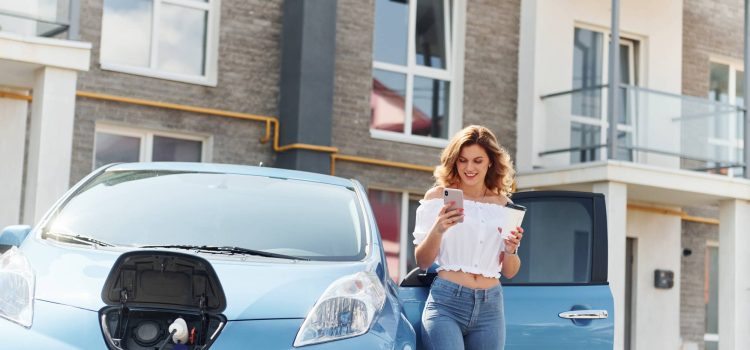
If you are using an Electric Vehicle (EV) or a Plug-in Hybrid Electric Vehicle (PHEV) for rideshare work, you are likely looking for ways to maximize your tax deductions. Charging your car at home is a significant expense, and the Australian Taxation Office (ATO) provides clear guidelines on how to claim these costs.
Whether you can claim these expenses depends on your record-keeping and the method you choose to calculate your costs.
Understanding the “Shortcut” Method (Cents-Per-Kilometre)
The ATO provides a simple, “shortcut” method for calculating the electricity costs of charging an EV or PHEV at home. This is designed for taxpayers who don’t have a separate electricity meter for their EV charger and want to avoid the complexity of tracking actual energy usage.
- The Rate: As of 2026, the ATO has updated the rate. For income tax purposes, the rate is 5.47 cents per kilometre from 1 July 2026. Prior to this date, the rate was 4.20 cents per kilometre.
- How it Works: You simply multiply your total business-related kilometres by the applicable cents-per-kilometre rate.
- The Benefit: You do not need to track exact kilowatt-hours or provide itemized electricity invoices for the car. You only need to demonstrate that you actually incur electricity costs (e.g., by providing a copy of your standard household electricity bill).
The Alternative: The “Actual Cost” Method
If you have a dedicated smart charger or a separate electricity meter that can accurately track exactly how much electricity is used specifically for your EV, you may choose to calculate your actual costs instead.
- When to use this: This method is often more accurate if you have specific equipment to measure usage.
- The Trade-off: You cannot “mix and match.” If you choose to use the ATO’s shortcut rate, you must use it for the entire year for that vehicle and ignore any other actual charging costs you might have incurred at home.
Crucial Steps for Rideshare Drivers
To claim these deductions, you must satisfy the ATO’s record-keeping requirements:
- Odometer Readings: You must record your odometer reading at the start and end of the financial year (1 July to 30 June).
- Logbook: If you are using the “logbook method” for other car expenses, you must maintain a valid logbook that clearly separates your business (rideshare) travel from your private use.
- Proof of Cost: Even when using the shortcut method, keep at least one recent electricity bill to show you are indeed paying for the power at your home.
- Consistency: The choice of method applies to the whole financial year. Once you commit to a calculation method for a specific vehicle for the year, you must stick with it.
Special Notes for PHEV Drivers
If you drive a Plug-in Hybrid (PHEV), the rules are slightly more nuanced because you also use petrol. You must ensure you only apply the home-charging rate to the electric-only portion of your travel. You may need to keep receipts for petrol and use the manufacturer’s fuel consumption data to “filter out” the petrol-powered kilometres from your total business travel.
Disclaimer: This information is for general educational purposes and does not constitute financial or tax advice. Because tax rules regarding EV charging and rideshare business deductions can be complex, always consult with a registered tax agent or accountant to ensure your specific claims are compliant with current ATO guidelines.



Comments
UNSW Off-Campus Accommodation 2026: Suburb Guide & Rent Prices
How a Visitor Visa Impacts Your Residency for Citizenship (2026)
Best Student Mobile Plans Australia 2026: Top 10 Under $30
Contacting Your University International Office: List of Numbers (2026)
Contacting Your University International Office: List of Numbers (2026)