








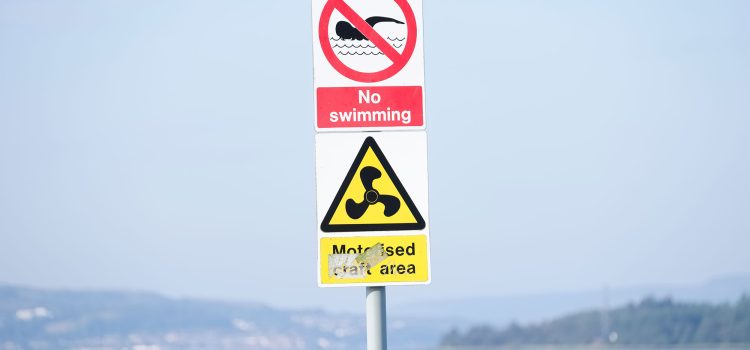
1. The Yellow Diamond: Warning Signs
Yellow diamonds are Hazard Signs. They don’t tell you what to do; they tell you what to look out for. In 2026, these are often paired with high-impact visuals like a person in distress to bridge language gaps.
- Shape: Diamond.
- Color: Yellow background with black symbols.
- Meaning: “Watch out, there is a danger here.”
- Common Icons (2026):
- Jagged Waves: Strong shore break or large waves.
- Person in a “V” shape: Deep water or sudden drop-offs.
- Wavy Arrows: Active rip currents in the area.
- Craggy Rocks: Submerged rocks or dangerous reef.
2. The Red Circle: Regulatory Signs
Red circles are Prohibition Signs. These are the “Law of the Beach.” Ignoring these isn’t just dangerous—in many council areas in 2026, it can lead to on-the-spot fines.
- Shape: Circle.
- Color: Red border with a diagonal line through a black icon.
- Meaning: “Do not do this. It is forbidden.”
- Common Icons (2026):
- Person Swimming: No swimming allowed (usually due to extreme danger).
- Surfboard: No surfing or watercraft in this specific zone.
- Fishing Rod: No fishing (often for swimmer safety or marine protection).
3. Blue and Green Squares: Information & Safety
While diamonds and circles warn of danger, square signs provide help.
- Blue Square (Information): Tells you about the beach’s features, such as “Patrolled Beach” or “Surfboard Riding Allowed.”
- Green Square (Safety): Shows you where to find help. Look for these for First Aid, Emergency Telephones, or Lifesaving Equipment.
4. New for 2026: High-Impact Warning Signs
Following a trial in early 2026 on the Mornington Peninsula, you may see new “High-Impact” signs at high-risk beaches.
- The Design: These combine a skull-and-crossbones symbol with real-life imagery of the specific hazard at that beach (e.g., a photo of a real rip current).
- The Reason: Research showed these were far more effective at stopping people from entering unpatrolled water than traditional text-based signs.
5. Summary Checklist: The 30-Second Scan
Before you touch the sand, spend 30 seconds at the signpost:
- Identify the Yellows: What are the hazards today? (Rips, stingers, or big waves?)
- Identify the Reds: Where are I not allowed to go?
- Locate the Green: Where is the nearest First Aid if something goes wrong?
- Final Check: Are the Red and Yellow Flags flying? If not, No Flags = No Swim.






Pingback: Why Secret Beaches are Dangerous 2026: The "No Lifeguard" Risk - Australia Student & Expat Resource Hub | NammAustralia